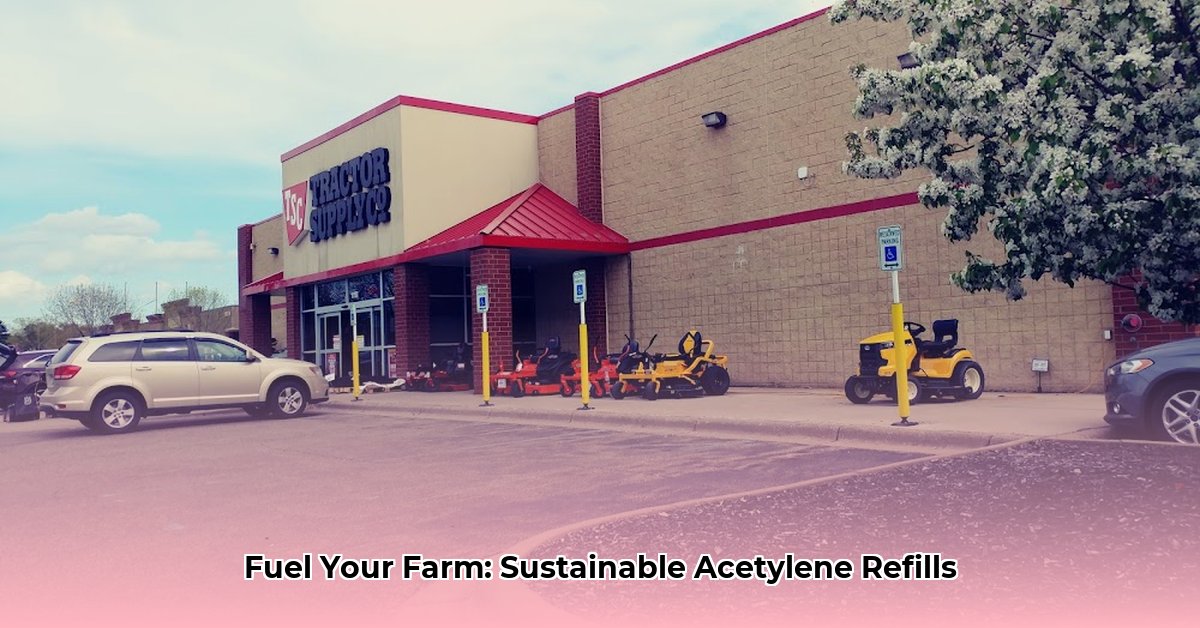
Acetylene, a powerful fuel gas, plays a surprisingly significant role in modern sustainable agriculture, particularly in precision farming techniques requiring high-heat applications. This guide details how to obtain and safely use Tractor Supply acetylene refills while minimizing environmental impact. We’ll cover responsible sourcing, safe handling, and environmentally conscious alternatives. For additional information on sustainable farming practices, check out this helpful resource: Salt Gun Info.
Understanding Acetylene's Role in Sustainable Agriculture
Acetylene's high-temperature flame is ideal for various tasks on a modern farm, from welding and cutting tools to powering laser weeding systems. Laser weeding, guided by GPS, precisely targets weeds, minimizing the need for herbicides. This leads to decreased chemical usage, a key component of sustainable farming. However, the production and use of acetylene aren't without environmental consequences.
The Environmental Impact of Acetylene
Acetylene production is energy-intensive and contributes to greenhouse gas emissions. The manufacturing process also involves hazardous materials. While acetylene aids in maximizing efficiency (and thus minimizing waste) on the farm, its overall impact needs careful consideration. Responsible use and exploration of alternatives are crucial for mitigating potential environmental harm. Is the enhanced efficiency offered by acetylene enough to offset its environmental footprint? The answer is not straightforward and depends heavily on responsible usage.
Safety Precautions: Handling Acetylene Responsibly
Acetylene is highly flammable and requires careful handling. Always follow the manufacturer's safety instructions included with your Tractor Supply acetylene tank—safety isn't optional; it's paramount. Key safety guidelines include:
- Cylinder Transportation: Always use a designed cylinder cart to transport acetylene tanks. Never carry them manually.
- Ventilation: Ensure adequate ventilation in the work area to prevent oxygen displacement and buildup of potentially harmful gases.
- Storage: Store acetylene tanks upright in a cool, dry, well-ventilated area, away from ignition sources.
- Refilling: Have your tanks professionally refilled by a qualified technician. Never attempt to refill an acetylene tank independently.
- Emergency Preparedness: Keep a fire extinguisher readily available and familiarize yourself with emergency procedures for leaks or fires.
Obtaining Tractor Supply Acetylene Refills
Tractor Supply Co. offers acetylene refills at many locations. Check their website or contact your local store for details on availability, refill procedures, and any specific safety requirements. They are a reliable source for refills, adhering to industry safety and handling standards.
Exploring Sustainable Alternatives to Acetylene
While acetylene has established uses, research is constantly yielding more sustainable alternatives. Propane and electric welding systems are increasingly viable options for various applications.
| Technology | Advantages | Disadvantages | Best Suited For… |
|---|---|---|---|
| Propane Welding | Lower cost, readily available, generally safer | Lower heat output than acetylene | Lighter-duty tasks, some repair applications |
| Electric Welding | No gas needed, cleaner emissions, precise control | Requires electricity, specialized equipment | Many metalworking operations |
The optimal choice depends on specific needs. Consider cost, availability, and environmental impact when selecting the best option for your farming practices.
Conclusion: Sustainable Practices with Acetylene
The responsible use of acetylene in sustainable agriculture hinges on safety, efficiency, and a commitment to exploring greener alternatives. By following these guidelines, farmers can minimize environmental impacts while leveraging acetylene's benefits for precision farming. Remember, securing your Tractor Supply acetylene refill is only one step within a larger commitment to sustainable agriculture. Continuous improvement and exploration of alternative technologies are vital to reducing our overall environmental footprint.